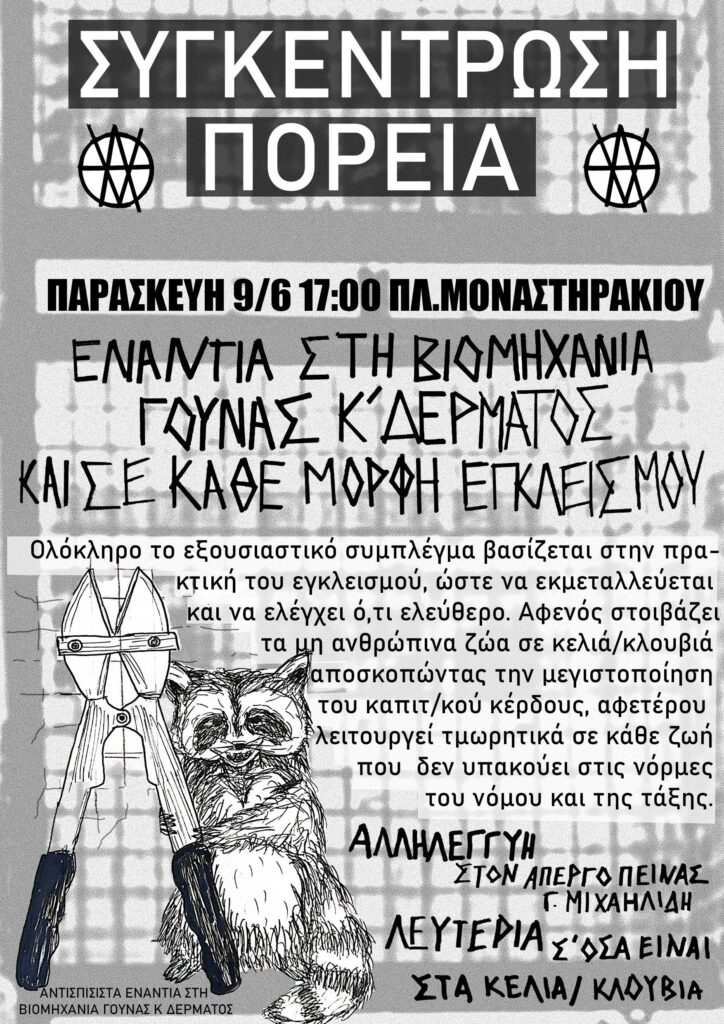
Athens: Gathering-demonstration against fur-leather industry and every type of confinement Friday 9/6 17:00 monastiraki square
It is difficult to depict with words what “fur and leather industry” means. We have been used to repeat terms without combining them with physical reality,to replicate them like they are abstract concepts, to forget that they come with the body pain of many,too many, individuals.Maybe the best description of the violent dissociation of animals’ leather and fur industry are these animals’ screams, their silences full of despair, their horror stares. All these happen far away from the well-polished cities,many kilometres away from the shining showcases of the stores that trade what has been stolen from the animals.
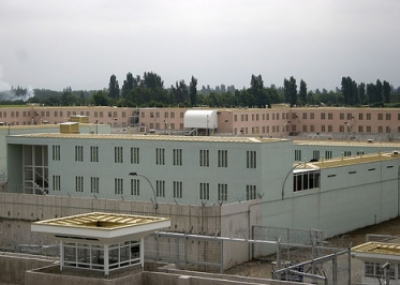
They happen for example in Kastoria,Kozani,Ptolemaida,Florina and Grevena where factories-prisons are full of small,dirty cages with weak,scared animals that have not been given even one day of freedom, without having ever been able to run,to play, to find comrades, to explore the forest and sleep quietly under one of its shadows. They grow up in bare minimum,merciless spaces,either being unable to come in touch with other creatures,or being piled up all together without their inherent competitiveness and their need for personal space. For example, minks fight fiercely each other,get seriously injured and stay with their wounds open and infected.Foxes are subjected to generical modifications in order to “offer” more fur while being slaughtered, and as a result they have heavy bodies and auto-immunes diseases that cause them pain every day.
Continue reading Gathering-demonstration against fur Friday 9/6 by Antispeciesists against fur and leather industry(Athens,Greece) →
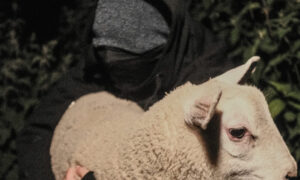 awaits them. This lamb will get real care and never see the slaughterhouse or be left to die and decay in some field corner.