
via: sansnom translated by Act for freedom now!
From emergency services to traffic management, a fire in a single electric battery has brought South Korea to a standstill
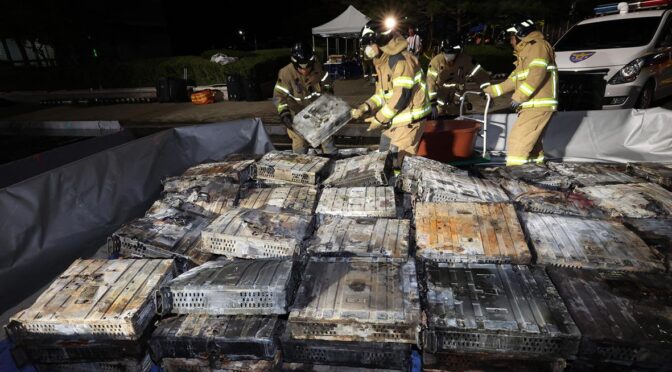
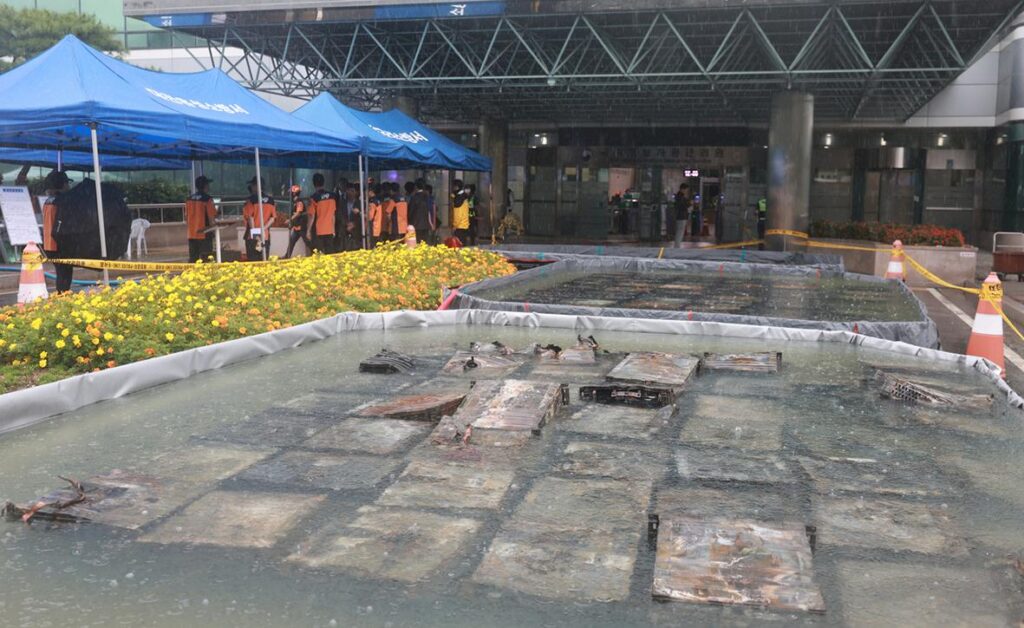
A fire in an electric battery has just paralyzed hundreds of public services across the country. The fire was spotted on the evening of Friday, September 26. It started in one of the lithium electric batteries that power the South Korean government’s large data center (NIRS), located in Daejeon, in the center of the country. This center is essentially the digital backbone of the administration. Imagine large air-conditioned buildings filled with servers and computers. This is where much of the population’s information is stored, which is necessary for the functioning of online public services, as well as financial services and the postal service.
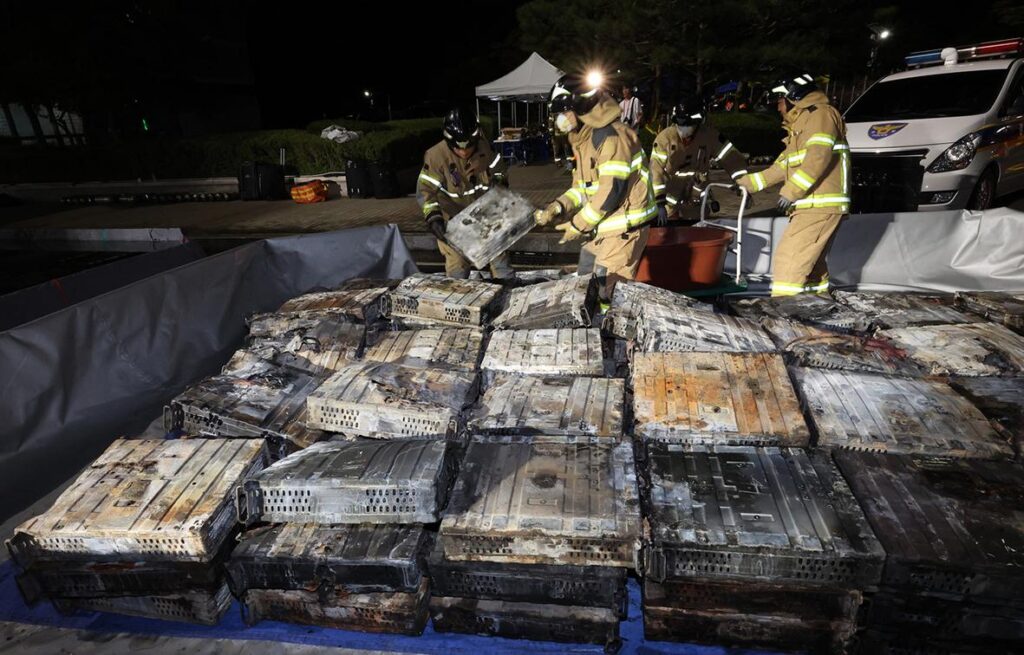
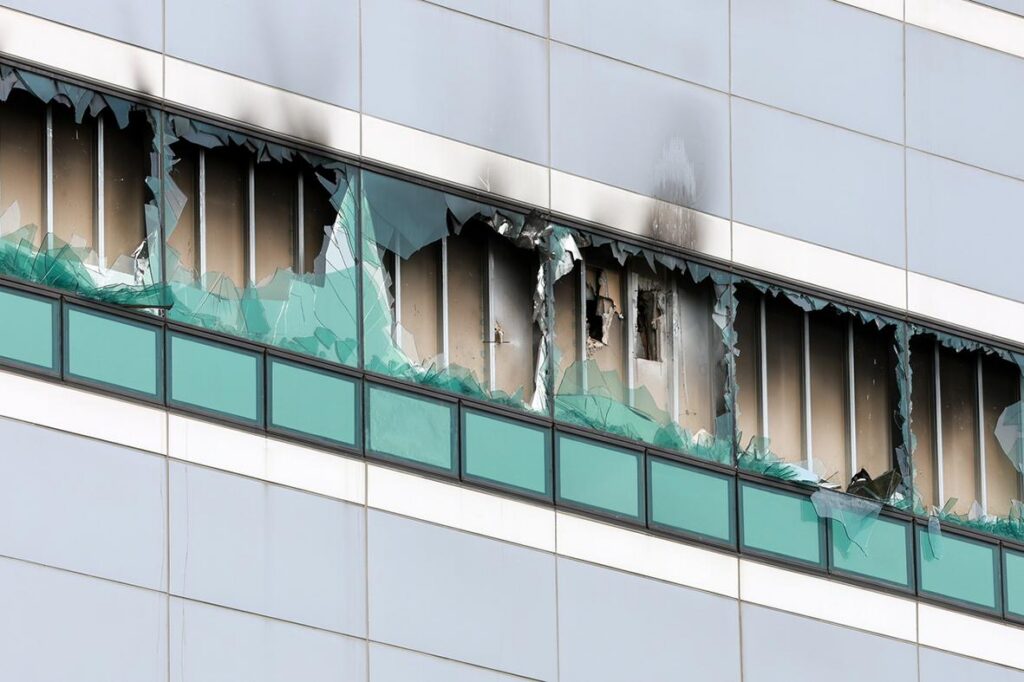
When the fire spread, operators had to shut down thousands of machines to allow firefighters to do their work. It is estimated that 647 government services were immediately suspended. Firefighters finally managed to extinguish the fire late Saturday afternoon, but government teams then realized that they had lost the servers that run 96 public services. Among the services interrupted: police emergency services could no longer locate people calling 911. The traffic management system was blocked, as was the police fine payment service. The portal that allows families to receive social assistance was also cut off. Tens of thousands of civil servants lost access to their emails. The postal service was also severely disrupted, with problems for card payments and personal transfers.
Today, Monday, September 29, panic continues to reign in government offices and town halls, as South Korea is one of the most digitalized countries in the world. The government has invested heavily in recent years to ensure that most administrative procedures can be carried out online. President Lee Jae-myung held an emergency ministerial meeting on Sunday and apologized to the public. He said he was sorry for the anxiety caused by this crisis. He promised to mobilize all public services to restore the affected systems as quickly as possible, but it will likely take several weeks before things return to normal.
In the media, this fire has reignited the debate on dependence on these data centers and the need to build backup infrastructure to avoid such paralysis.
Public services shut down in South Korea after fire at data center
Courrier International, September 29, 2025
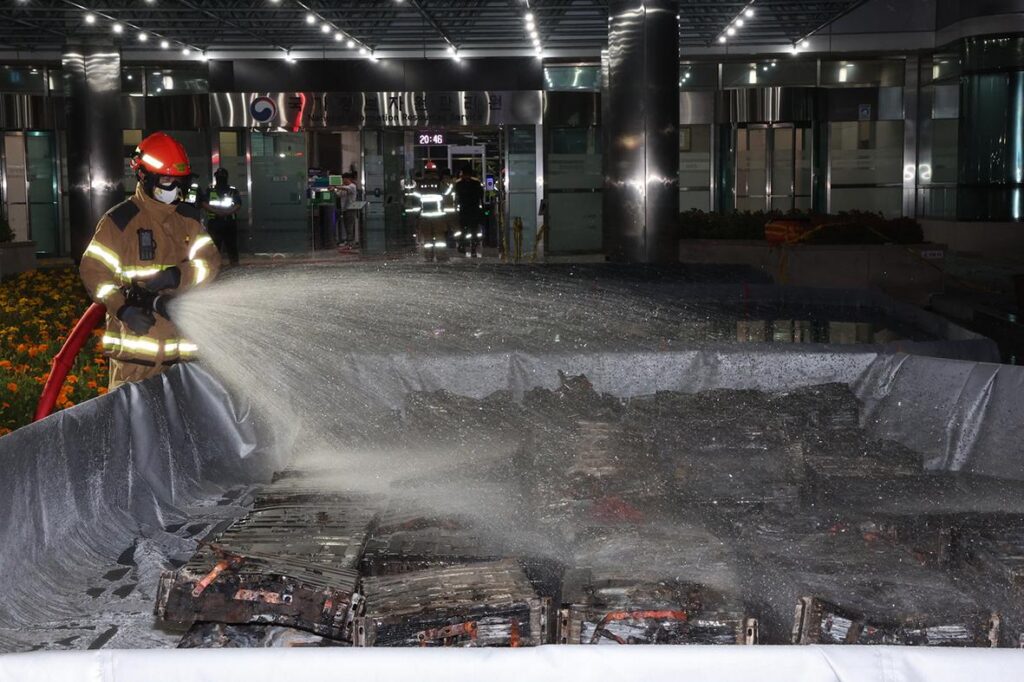
This incident highlights the fragility of South Korea’s public services, which are increasingly dependent on digital infrastructure. On the evening of September 26, a fire ravaged the National IT Resource Center in the South Korean city of Daejeon, south of Seoul. According to the daily newspaper Chosun Ilbo, the fire, which broke out during a routine inspection conducted by the institution, caused no casualties but damaged the heart of a state that has chosen digitalization as one of its fundamental strategies.
The fire was brought under control the next day, but the damage was severe: no fewer than 740 servers and 384 batteries were literally reduced to smoke, blocking nearly 650 computer systems essential to the country’s public services, according to the news site Korea Wave, which described the situation as “chaos.” As a result, many platforms managed by the public authorities, such as the postal banking service, identity cards, and the housing allowance website, were shut down.
As for the cause of the fire, the country’s press reports that it was caused by the ignition of a lithium-ion battery, which had exceeded its recommended service life by one year. The South Korean government has stated that, due to the malfunction of the backup system, it will take a month to restore all services. “We apologize for the damage caused by this fire to the lives of South Koreans. We will do our utmost to restore the information systems and prevent further accidents,” said President Lee Jae-myung, quoted by the KBS television channel’s website.
A “disgrace” for the state
Beyond blocking administrative websites, this fire is a serious blow to the South Korean authorities, who have made the digitalization of public services one of the pillars of the state’s strategy. This is especially true given that the country experienced similar computer failures in 2022, when a data center belonging to Kakao Talk, a major messaging platform in the country, was damaged by fire. The company was severely criticized by the government, which questioned the lack of a backup system, according to The Korea Times, an English-language South Korean newspaper.
Barely three years later, the country’s authorities are facing the same accusations regarding the lack of a functional backup system. “We have a system that covers needs to a certain extent,” a government source told the JoongAng Ilbo newspaper. “But due to a lack of budget, among other things, we have failed to make it work properly.”
In its September 29 editorial, the left-wing daily Hankyoreh lambasted the government, recalling that in 2022 it had claimed that the state’s IT systems would recover “within three hours” in the event of a failure: “For a country that prides itself on its IT capabilities, this is a shameful situation,” the newspaper said, calling the incident “a fatal weakness even in terms of state security.” It added: “The government must repair the damage as soon as possible and put fundamental preventive measures in place. State security is a cross-party issue, and political parties should join forces in this area.”