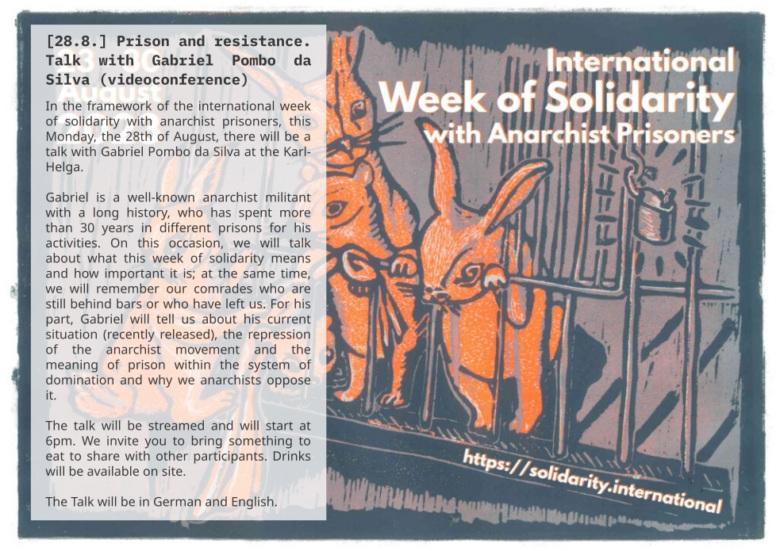
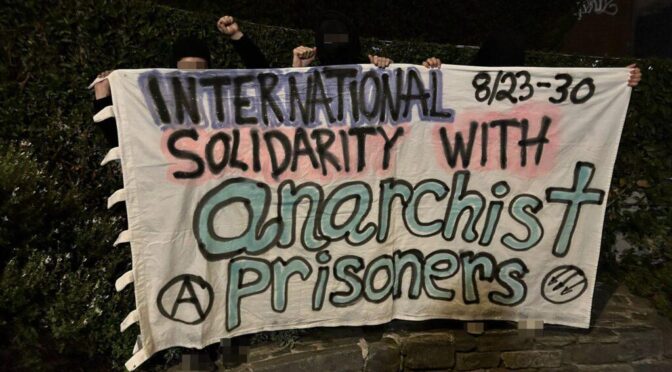
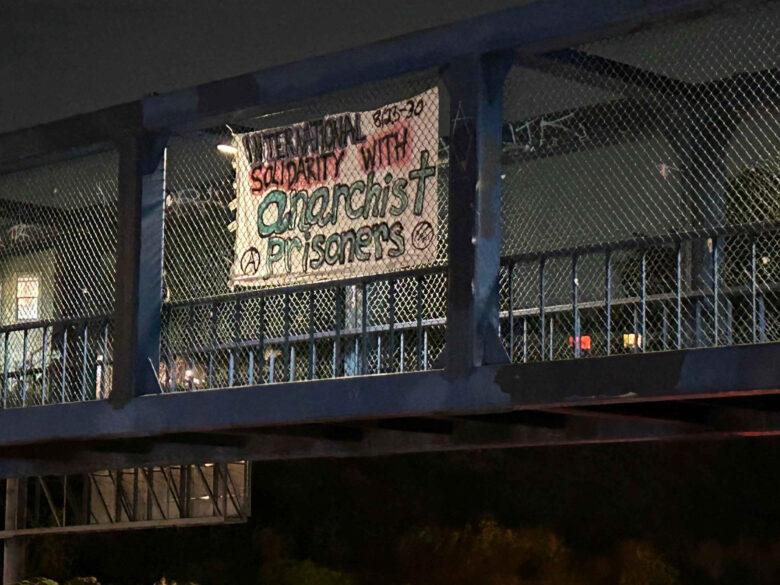
Today, 29 August Thomas was released after almost 27 years imprisoned!Best action during the International Week of Solidarity with Anarchist Prisoners!First prize: FREEDOM!We are all really happy and wish Thomas all the best and welcome home!
We still share his letter of solidarity for this years week.
Thanks for supporting the Week of Solidarity for many years.
———————————————————————————————————
Solidarity greetings for the Soli Week for Anarchist Prisoners 2023
Also here from Freiburg in southern Germany, solidarity and warm greetings for the Soli Week. For almost 27 years I have been observing the world behind bars from the perspective of a prisoner. First in pre-trial detention, later in criminal detention and finally since 2013 in preventive detention. Preventive detention was introduced in Germany in 1933, yes, it was the Nazis who amended the criminal law accordingly on 24.11.1933 – since then, people can be held in prison in Germany for an unforeseeable period of time even after serving their prison sentence. In the 1990s and 2000s, other European countries followed suit, always in the name of “public security”: Belgium, France, Sweden, Great Britain, Switzerland and many more.
In many cases, normal imprisonment is already a death sentence in instalments, first the soul dies, and often in the end the body dies as well. Just a few weeks ago, a man in his early 40s took his own life in the Freiburg preventive detention, apparently seeing no realistic prospect of regaining his freedom. His wife, children, adoptive mother and siblings mourn him – but so do some of the other inmates. However, it must be clear that prisoners also have the right to take their own lives. No one should be allowed to forbid them to do so. But it must also be asked what responsibility the state institutions bear for such a decision? It would be too easy to release them from their responsibility by referring to the autonomous decision of the respective inmates.
Continue reading Thomas Meyer-Falk is free!!! (Germany)